
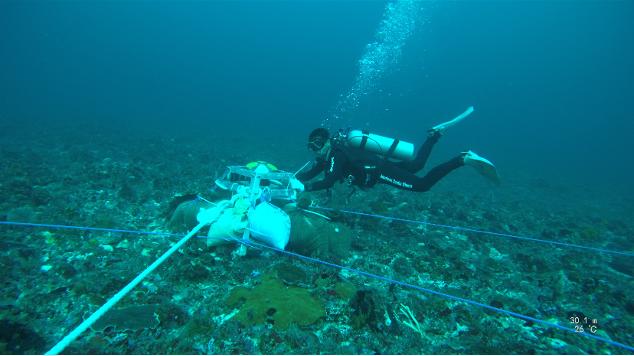
Oceanography in general is the study of the ocean, including its physical, chemical, biological and geological properties. While engineering is the application of science and mathematics to create and develop solutions to technical problems.
Oceanography’s Role in Marine Renewable Energy (MRE)
Oceanography provides an in-depth understanding of the characteristics of the ocean that are indispensable in the development of Marine Renewable Energy (MRE). Some of the roles of oceanography include:
-
- Resource Potential Mapping: Oceanographers can map the potential of MRE resources, such as wind speed, wave height, and tidal currents in various areas of Indonesian waters.
-
- Environmental Condition Analysis: Oceanographers can analyze marine environmental conditions, such as temperature, salinity, and depth, to determine the most suitable location for the construction of MRE infrastructure.
-
- Oceanographic Modeling: Oceanographic models are used to predict changes in ocean conditions over the long term, so they can aid in the planning and operation of MRE systems.
-
- Environmental Impact Evaluation: Oceanography also plays a role in evaluating the environmental impact of the development and operation of Marine Energy infrastructure.
The Role of Engineering in Ocean Energy
Engineering plays a role in designing, building, and operating MRE technology. Some of the engineering roles include:
-
- Marine Energy Device Design: Engineers can design different types of Marine Energy devices, such as offshore wind turbines, wave power generation devices, and tidal turbines.
-
- Structural Analysis: Engineers can analyze the structural strength of Marine Energy devices to ensure resistance to extreme marine conditions.
-
- Performance Optimization: Engineers strive to optimize the performance of MRE devices to efficiently generate electricity.
-
- Maintenance and Repair: They are responsible for the maintenance and repair of MRE devices.
Oceanography and Engineering Collaboration
Collaboration between oceanographers and engineers is essential for the successful development of Ocean Energy. Oceanographers provide data and information about ocean conditions, while engineers use that data to design and build appropriate technologies.
Examples of collaboration:
-
- Site Selection: Oceanographers identify sites that have high MRE potential, while engineers evaluate the technical and economic feasibility of those sites.
-
- Device Design: Oceanographers provide data on marine environmental conditions, such as current velocity and wave height, which are used by engineers to design optimal MRE devices.
-
- Environmental Impact Evaluation: Oceanographers and engineers work together to evaluate the environmental impact of Ocean Energy projects and design mitigation solutions.
Challenges of Marine Energy Development
The development of marine energy at the global level and in Indonesia still faces several challenges, such as relatively high investment costs, technology that is still developing, and lack of competent human resources. However, the opportunities that open up are huge, considering the potential of Indonesia’s marine resources which are very abundant.
Marine Energy Development Opportunities:
-
- Energy Independence: Ocean Energy can reduce Indonesia’s dependence on fossil energy and increase energy security with sustainable and environmentally friendly energy sources.
-
- Job Creation: The development of Marine Energy can create new jobs in the energy sector and related industries.
-
- Economic Growth: Marine Energy can drive regional economic growth, especially in coastal areas.
Oceanography and engineering have complementary roles in the development of MRE in Indonesia. Close collaboration between these two disciplines is essential to address challenges and maximize the potential of MRE. With government support, investment support, and human resource development, Indonesia has a great opportunity to become a leader in the development of the MRE industry in the Southeast Asian region.
If you have any questions or need further information, feel free to reach out to us below. Our team is ready to assist you with expert guidance and tailored solutions for your Marine Renewable Energy development projects in Indonesia.